Collection:
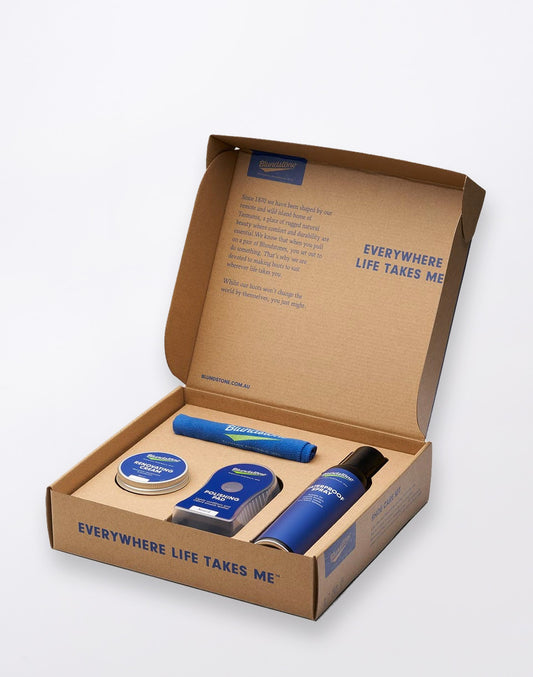
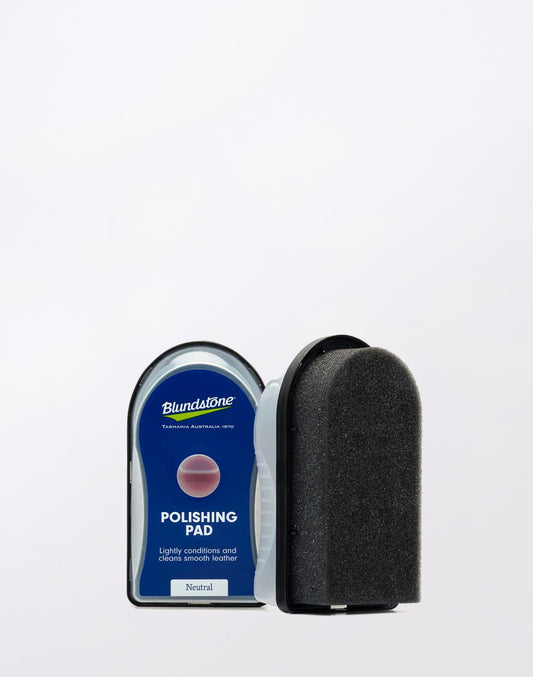
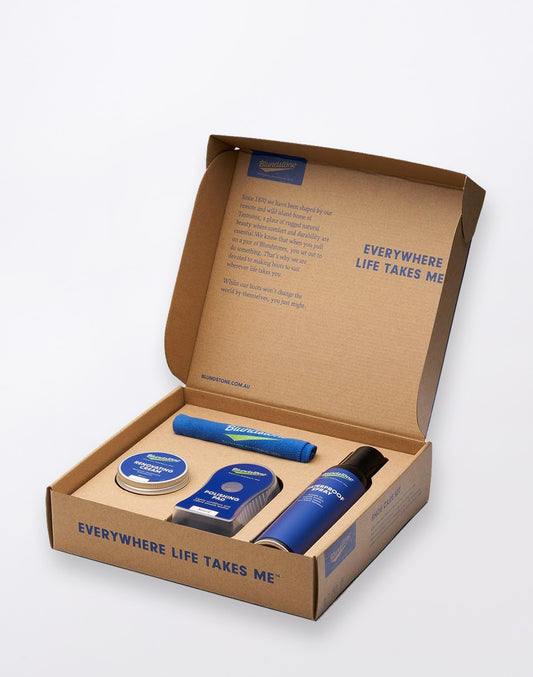
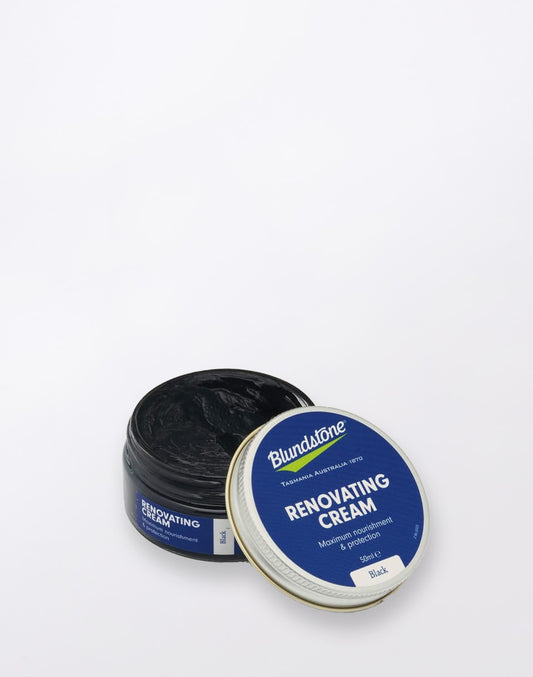
Blundstone Shoe Care
The Blundstone family sailed into Hobart, Tasmania, in the 1850s after ninety-three days at sea from England.
In 1870, John Blundstone founds a boot-making company and stitches footwear for a town on the edge of the rugged Tasmanian wilderness: for farmers, workers and dance halls, as the period catalogue advertised.
The company then survives everything.
In the First World War it boots Australian soldiers; during the Great Depression the Cuthbertson shoemaking family takes over and still owns it today; in the Second World War it supplies the army with half a million pairs, including jungle-soled boots for the infamous Kokoda Track.
In the 1960s comes the moment that defines the brand: the 500, an ankle boot without laces, with elastic side panels and the signature pull-tabs.
The silhouette has barely changed since, and over 25 million pairs have been sold.
In the 1970s, Blundstones accompanied an Australian expedition to below Everest, where the Nepalese Sherpas took such a liking to them that they asked for a pair as a farewell gift.
Blundstone today is a rare species of company: over 150 years old, still one hundred per cent family-owned and still built on one and the same boot, because nobody has invented a better one yet.
Boots you buy once a decade.
And then simply wonder whether you’ll ever take them off.
More